Selected Work

How we turn claims into evidence, contradictions and required action.

The cases below are anonymized and simplified to protect confidential counterparties and transaction details. Their purpose is to show our reasoning process, not to publish private client information.

Supplier Identity Verification

A credible company name, but an unsupported digital identity chain.

What we received: A commercial offer presented under the name of a real industry company.

What we observed: Domain age, hosting, mail routing and sender infrastructure did not align with the claimed corporate history.

How we tested it: We separated the real company from the identity used in the transaction and cross-checked corporate, domain, email and communication evidence.

Required action: Independent identity confirmation before any freight, deposit or banking commitment.

Value: prevented a real company identity from being mistaken for a verified transaction counterparty.

44,000 MT LPG Transaction

The documents looked complete. The vessel identity did not.

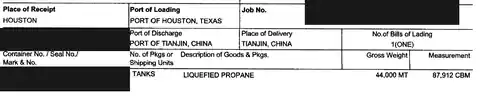
What we received: A POP package describing a 44,000 MT refrigerated propane shipment from Houston to Tianjin, supported by a bill of lading, voyage report, inspection material and vessel documents.

What we observed: The commercial story was plausible enough to require deeper testing, but vessel identity, flag and timing fields did not reconcile across the evidence chain.

How we tested it: We screened the Houston LPG/VLGC departure window, isolated physically plausible vessels, then used the IMO number as the persistent identity key and cross-checked vessel history, flag, port calls and voyage sequence.

Required action: Reconcile the vessel identity and obtain independently verifiable carrier / port / terminal evidence before treating the cargo as proven.

Value: moved the review from document appearance to physical-voyage reconstruction.

Crude Oil Counterparty Verification

The vessel was real. The cargo evidence was real. The transaction authority was not.

What we received: A crude-oil transaction supported by a substantial historical cargo-document package and a real operating tanker.

What we observed: Independent vessel records corroborated the physical ship, while the cargo documents were internally coherent enough to look highly credible. But current ownership / management data and the commercial identity presenting the transaction did not align with the historical evidence package.

How we tested it: We separated three questions that are often wrongly treated as one: Is the ship real? Is the cargo evidence real? Is the party presenting the deal currently authorized to sell or control it?

Required action: Require current title, authority and payment-chain evidence before any instrument, deposit or third-party payment is released.

Value: prevented genuine maritime and cargo evidence from being used as a substitute for proof of current commercial authority.

Sulphur Transaction

Supplier KYC was not enough — the risk sat in payment and title control.

What we received: Supplier terms, payment requirements, inspection conditions and delivery structure.

What we observed: Even a genuine supplier would not eliminate exposure created by document release, payment timing and title-control gaps.

How we tested it: We mapped contract, bank instrument, shipping documents, inspection triggers and physical delivery into one control chain.

Required action: Align payment with evidence, document control and actual delivery milestones.

Value: converted a background check into a transaction-level risk-control review.

Banking & Transaction Structure

A proposed beneficiary structure could break commercial control.

What we received: A documentary-credit structure involving multiple commercial parties.

What we observed: Contract rights, LC beneficiary position and economic protection were not aligned.

How we tested it: We reconstructed the money flow, document flow, contractual rights and control points after instrument issuance.

Required action: Protect the commercial position through contractual or banking controls before the instrument is opened.

Value: exposed structural risk before the financial instrument created irreversible leverage.

Evidence Reconstruction · 44,000 MT LPG Case

We tested the cargo story against the entire Houston vessel window — not against one document.

Selected evidence below is intentionally limited and anonymized. It shows how a transaction-level review moves from document claims to independent vessel identity and physical-voyage testing.
Houston → Tianjin44,000 MT Propanerelevant Houston loading window22 LPG / VLGC candidates reviewed
Redacted LPG bill of lading extract showing route, cargo type and quantity
Submitted B/L extract. Route, product and quantity are retained; vessel, voyage and other identifying fields are redacted.
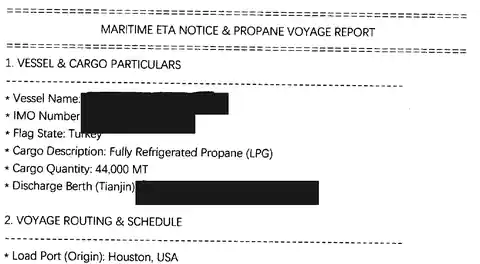
Redacted LPG voyage report extract showing the claimed Turkey flag and cargo details
Submitted voyage report. The claimed flag and cargo details are visible while vessel identity and exact dates are removed.
POP · Bill of Lading
Houston → Tianjin · 44,000 MT · claimed on-board date

The submitted B/L described liquefied propane loaded at Port of Houston for Tianjin and stated a specific on-board date.

POP · Voyage Report
Claimed flag: Turkey

The voyage report stated “Flag State: Turkey” and provided a specific Houston departure and Tianjin arrival sequence.

Independent Vessel Identity
The vessel’s IMO became the anchor

Using the IMO rather than the vessel name allowed us to track the same physical ship across name and flag changes and compare it with the transaction documents.

Key contradiction: the flag claim did not survive the IMO cross-check.

The submitted voyage material identified the vessel as Turkish-flagged. Independent records tied to the submitted IMO instead showed a different flag history around the relevant voyage period, and the same persistent IMO later appeared under a different vessel name and flag.

Why this matters: vessel names and flags can change; the IMO number is the persistent identifier. Once the IMO was fixed, the transaction document's Turkey flag claim no longer matched the independent vessel identity history.

Selected rows from the Houston vessel screen

We did not search for a vessel that “looked right.” We built a broader candidate set and eliminated vessels by capacity, timing and destination.

CandidateHouston timingCapacity / classPost-Houston routeAssessment
Candidate Awithin claimed loading windowVLGC-size capacityU.S. Gulf → claimed China destinationClosest physical match
Candidate Badjacent to claimed loading windowVLGC-size capacityDifferent destinationTiming close; destination mismatch
Candidate Coverlapping claimed loading windowVLGC-size capacityDifferent Asia destinationStill in Houston after claimed departure
Candidate Dafter claimed loading pointVLGC-size capacityChina-bound, different portWrong timing / destination
Candidate Eafter claimed loading pointVLGC-size capacityLater China-boundArrived after claimed loading point
Step 1 · Scope the physical universe
22 candidate LPG / VLGC movements

We screened the relevant Houston window rather than assuming the vessel name provided in the POP was correct.

Step 2 · Eliminate by hard constraints
Capacity · Timing · Destination

Smaller LPG carriers, late arrivals, early departures and incompatible destinations were excluded before deeper identity work.

Step 3 · Fix the identity
IMO → history → flag → port calls

The closest physical match was then tested through persistent IMO identity and independent vessel records, exposing the flag inconsistency.

Method note: public AIS and vessel databases can be delayed or retain different snapshots. We therefore do not treat any single database as conclusive; the value comes from reconciling multiple independent sources against the commercial documents and timeline.
Evidence Separation · Crude Oil Case

Real vessel. Real cargo history. Unverified current counterparty.

This case shows why asset verification and counterparty verification must remain separate. A genuine ship and authentic-looking historical cargo records can still be used inside a transaction that the presenting party has no proven authority to execute.

Independent Vessel Database
Physical vessel independently corroborated

Vessel type, capacity, operating status and core registry characteristics were consistent with a real crude-oil tanker in active service.

Cargo & Survey Documents
Historical cargo evidence was commercially coherent

The document set included a bill of lading, manifest, quantity / quality certificates, inspection records and cargo-survey material. Product characteristics were broadly consistent with the crude grade described.

Transaction Authority
Current commercial control was not established

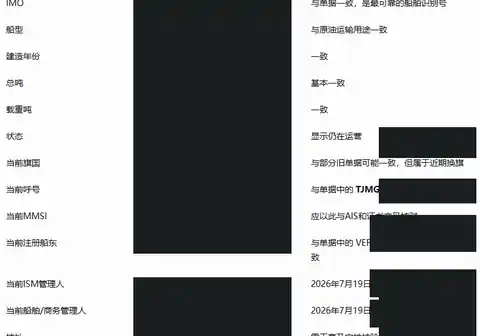
Current vessel ownership / management information and the party presenting the transaction did not align cleanly with the historical document-side chain. The evidence did not establish current title or authority to sell.

The decisive point was not whether the ship or old documents were genuine.

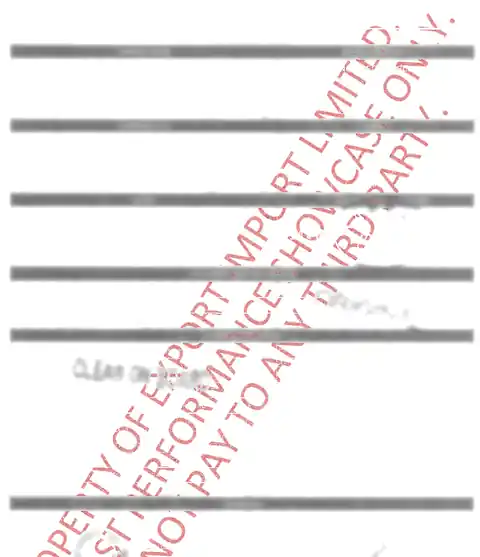
The document package itself stated that it was for past performance showcase rather than proof of a current live cargo. Current vessel records also showed a different ownership / management profile from the historical transaction documents.

Risk implication: genuine historical documents can be reused to create a highly convincing commercial story. Without current authorization, title and payment-chain verification, the buyer may be dealing with a party that does not control the transaction at all.

Redacted cargo document showing the past-performance-only control watermark
Document-control evidence. The source package itself was marked for past-performance showcase rather than proof of a current live cargo. Transaction identifiers underneath have been obscured.
Redacted vessel registry comparison showing current ownership and management fields
Current registry cross-check. Current ownership and management fields were compared with the historical transaction-side chain; names, identifiers and dates are masked here.
Question 1
Is the ship real?

Yes. Independent registry and vessel data supported the existence and operating profile of the tanker.

Question 2
Is the cargo evidence real?

Historically credible. The documentation formed a coherent past-performance record, but it was not evidence of present title or control.

Question 3
Is the presenting party authorized?

Not proven. The current ownership / management and authority chain could not be reconciled to the party asking the client to proceed.

Client outcome: the client disengaged before funds or banking instruments were exposed. The investigation prevented real maritime evidence from creating false confidence in the commercial counterparty.

Privacy note: names, IMO number, dates, counterparties and route-specific identifiers are intentionally omitted from this public case study.

Our Case Standard

We do not stop at a red-flag list.

ClaimEvidenceSource GradeConfidenceContradictionRiskRequired Action

Every meaningful finding should change the client's next action: request new evidence, alter the structure, reduce exposure, escalate to a specialist or stop the transaction.